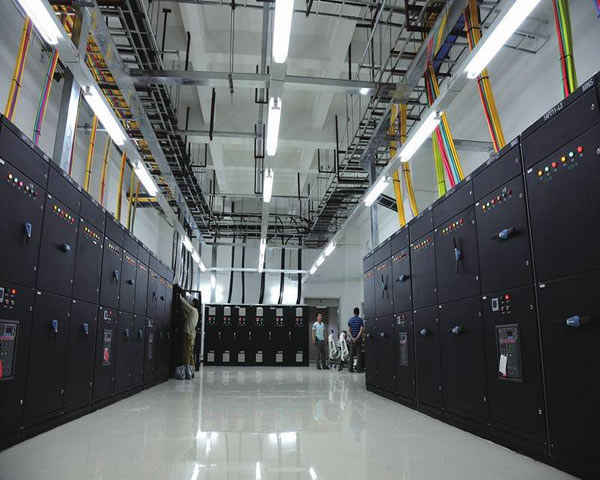
This article aims to “evaluate the advantages and disadvantages of Contabo’s data centers in Germany and the United States from the perspectives of compliance and data sovereignty.” It outlines the main differences between these two locations in terms of laws, regulations, technology, and operations, to help companies make informed decisions that balance compliance requirements with risks when choosing a location.
Overview of Compliance and Data Sovereignty
Compliance and data sovereignty focus on data ownership, access control, and legal jurisdiction. For cloud and hosting services, the location of the data center determines the applicable laws, regulatory requirements, and government access rights, thereby affecting data risks and compliance costs.
German server room Advantages: Strict GDPR enforcement
German data centers are typically subject to both the General Data Protection Regulation (GDPR) of the European Union and Germany’s own data protection laws. The regulatory framework is quite strict, emphasizing data minimization, transparency in data processing, and the rights of data subjects, thereby helping to protect the data sovereignty of European users.
German legal and regulatory framework
German regulators are strict in enforcing rules and penalties, and local courts have a clear review mechanism for cross-border requests. For handling sensitive data or services targeting EU users, German data centers are generally easier to meet the requirements in terms of compliance certification and risk management.
Advantages of U.S. data centers: Flexible compliance ecosystem
U.S. data centers are generally more mature in terms of business services, network connectivity, and cloud ecosystems, with flexible compliance practices and a wide range of supporting tools. For businesses that require global distribution, low latency, or rely on the U.S. market, U.S.-based data centers have advantages in terms of performance and ecosystem integration.
U.S. Legal Environment and Risk Points
The United States has a legal framework for national security and law enforcement (such as search warrants or intelligence-related requirements), which poses certain risks regarding data access and government requests. Cross-border companies need to assess the impact of these laws on business data sovereignty.
Comparison of Data Transmission and Cross-Border Processing
Whether choosing a data center in Germany or the United States, cross-border transmission involves compliance procedures. Germany/the EU focus on prior compliance and standard contract clauses, while the U.S. emphasizes supplier control and approval processes. Companies should choose the appropriate transmission mechanism based on the category of data.
Comparison of Data Access and Government Requirements
Government visits to Germany are usually subject to judicial oversight and require transparency ; The United States may be more direct in requests related to national security. When evaluating, attention should be paid to the service provider’s disclosure policies and historical records regarding government requests, as well as technical access visibility.
Technical and operational compliance measures
Regardless of the location of the server room, strong encryption, access control, log auditing, and data classification are key to reducing compliance risks. Choosing a solution that supports customer-managed keys, VPC isolation, and exportable audit logs helps enhance control over data sovereignty.
Auditability and contractual safeguards
Contract terms (data processing agreements, standard contract clauses, list of sub-processors) and auditable compliance certificates are important criteria for assessing a service provider’s compliance capabilities. Priority should be given to requiring transparent sub-processors to disclose and allow for audits.
Business scenario recommendations: How to choose?
For businesses serving EU customers or dealing with sensitive personal data, German data centers are preferred to reduce risks related to data sovereignty and regulatory compliance ; If performance, low latency, or reliance on the U.S. ecosystem are priorities, choose a U.S.-based data center and strengthen contracts and technical safeguards.
Summary and Recommendations
When evaluating the advantages and disadvantages of Contabo’s data centers in Germany and the United States from the perspectives of compliance and data sovereignty, business data attributes, user location, legal constraints, and technical capabilities should serve as the basis for decision-making. Prioritize verifying the service provider’s compliance documents, audit records, and contract terms. If necessary, combine multi-regional deployment and encryption strategies to achieve a balance between compliance and business flexibility.
- Latest articles
- Optimization Techniques For Combining Hong Kong Station Multi-IP Cluster Servers With Load Balancing Technology
- How To Choose A Cheap Hong Kong VPS That Ensures Access Quality And Latency At Low Cost
- Cambodia CN2 Return To China Server Deployment Process And Common Troubleshooting Guide
- Is It Illegal To Buy A US High-defense Server? Typical Legal Risk Case Analysis And Enterprise Self-inspection Checklist
- Practical Sharing Of Cambodia VPS's Advantages And Deployment In Overseas Marketing And Promotion
- How To Select Data Centers And Lines To Maximize The Stability Of Thailand's VPS Network
- How The Operations Team Monitors And Optimizes The Performance And Availability Of VNPs CN2 In Vietnam
- Detailed Guide On How To Achieve Low-latency Matches On The Infinite Rule + Thai Servers
- Analysis Of Stable And Affordable Server Configurations And Cost-effectiveness For Small And Medium-sized Enterprises In Malaysia
- Analysis Of The Advantages Of Choosing US Server Hosting For Enterprises In Cross-border Business
- Popular tags
-
Which Is The Cheapest And Most Cost-effective Choice For German Cloud Servers?
This article introduces the cheap and cost-effective cloud server choice in Germany to help users find the right cloud service provider. -
The Process And Precautions For Checking Servers In Germany In The United States
this article details the process and precautions for checking servers in germany in the united states, and provides professional guidance for relevant companies and individuals. -

Video Comparison And Analysis And Inspiration Between German Computer Rooms And Chinese Computer Rooms
A thorough analysis of the video comparison between German computer rooms and Chinese computer rooms, discuss the similarities and differences in facilities, technology, management, etc., and provide reference for enterprises to choose a suitable data center.